3D Printing Service
3D Printing Service provides on-demand, professional-grade additive manufacturing without the need for in-house equipment or expertise. By leveraging technologies like FDM, SLA, SLS, and metal printing, these services turn digital designs into precise physical parts—from rapid prototypes to functional end-use components.
Ideal for businesses, engineers, designers, and creators, a 3D printing service offers scalability, material variety, and expert finishing, accelerating innovation and reducing time-to-market.
MJF (Multijet Fusion)
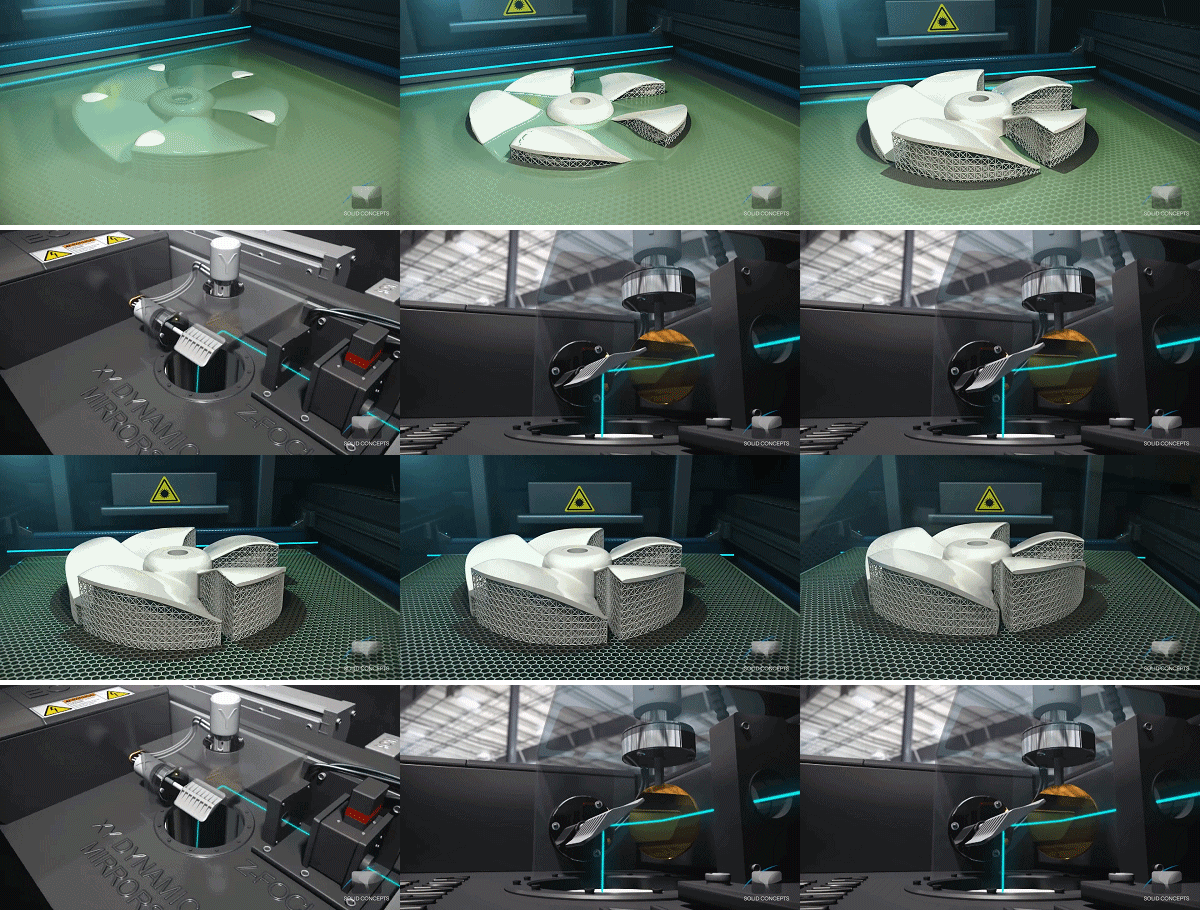
HP’s Multi Jet Fusion (MJF) is an industrial-grade 3D printing process. It works by spreading a fine layer of nylon-based powder, to which fusing and detailing agents are precisely jetted. A heating element then passes over the bed, causing the areas with fusing agent to melt together. This layer-by-layer process enables the fast production of complex, functional parts with excellent strength, fine detail, and isotropic properties.
Ideal for functional prototyping, durable end-use parts, and on-demand manufacturing, MJF is a key technology for agile and digital industrial production. prototype and parts in 24 hours at the earliest
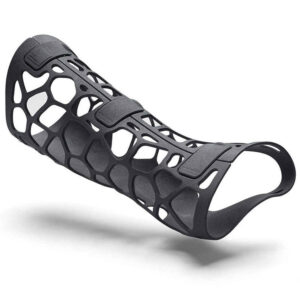
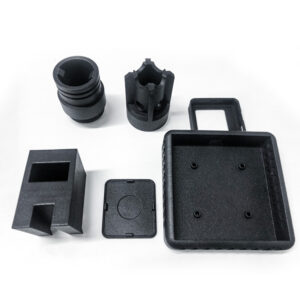
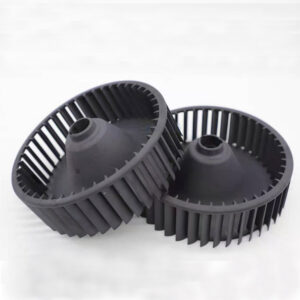
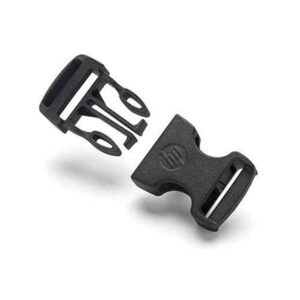
MJF is commonly used for cost‑effective functional nylon parts, automotive automation components, robotics parts, orthotics, and consumer electronics.
SLS (Selective LaserSintering)
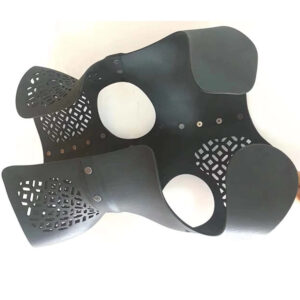
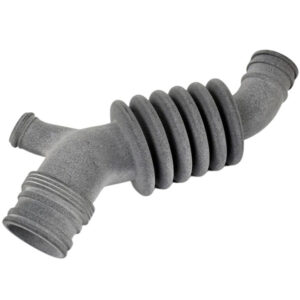
Selective Laser Sintering (SLS) is a widely-used industrial 3D printing technology. It uses a high-power laser to selectively sinter (fuse) fine particles of polymer powder, such as nylon, layer by layer. The surrounding unsintered powder acts as a natural support structure, allowing for the creation of complex, durable, and functional parts with high strength and good chemical resistance.
As one of the most established 3D printing methods, SLS is ideal for producing robust prototypes, intricate end-use components, and parts requiring flexibility without the need for dedicated support structures.
SLS is commonly used for high‑temperature resistant nylon parts, aerospace components, engineering machinery parts, and outdoor equipment.
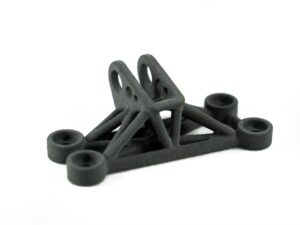
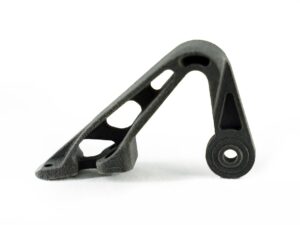
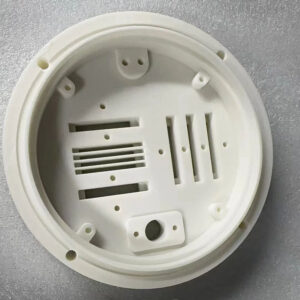
SLA 3D printing service
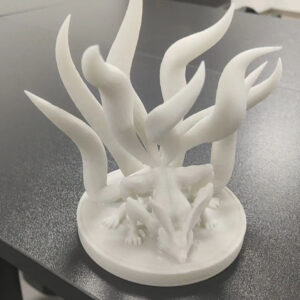
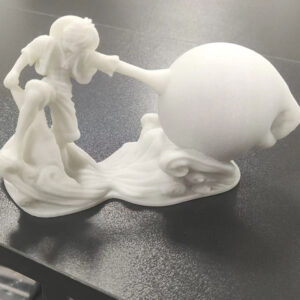
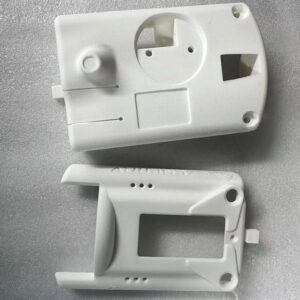
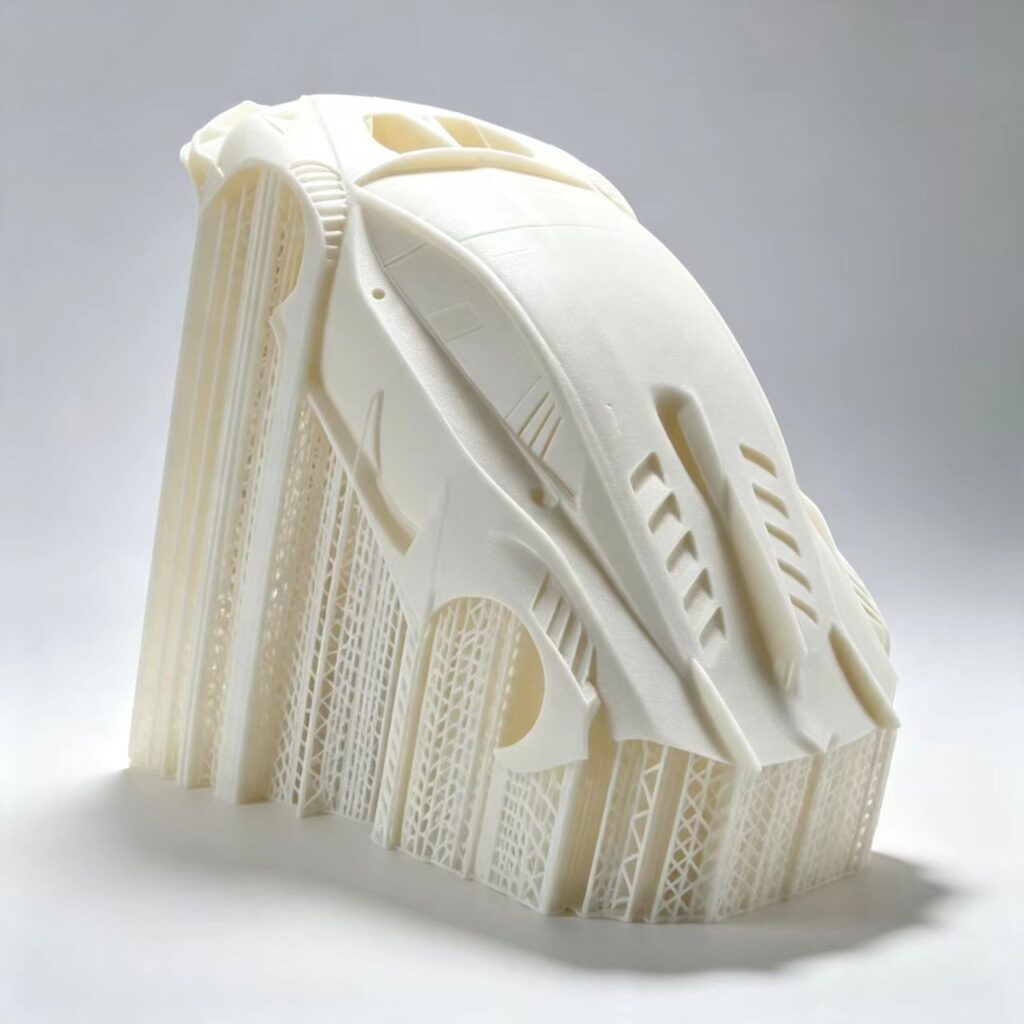
SLA (Stereolithography) 3D Printing Service is a premier solution for creating high-resolution, visually precise prototypes and models. Using a UV laser to selectively cure liquid photopolymer resin layer by layer, it produces parts with exceptionally smooth surfaces, fine details, and excellent accuracy.
Ideal for concept models, detailed prototypes, artistic pieces, and applications requiring a superior finish, an SLA service provides professional-grade results without the need for in-house equipment investment.
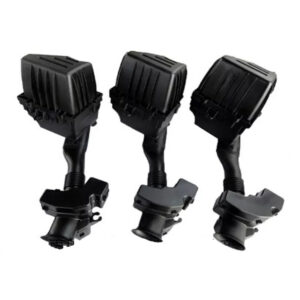
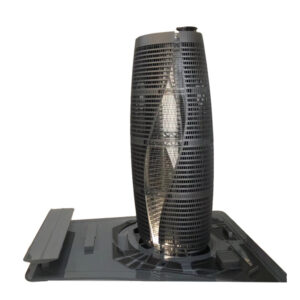
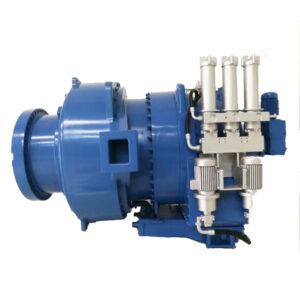
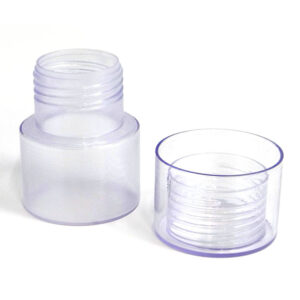
SLA is commonly used for large‑size high‑surface‑finish parts, transparent components, automotive appearance parts, lamp housings, and conceptual prototypes.
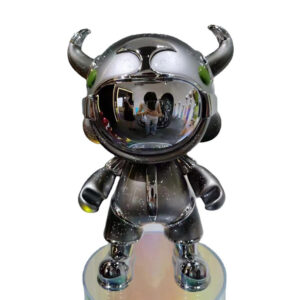
PolyJet/Full color printing
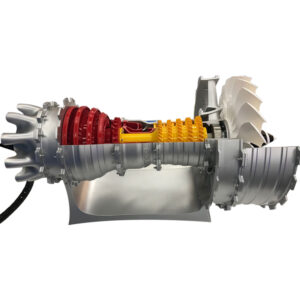
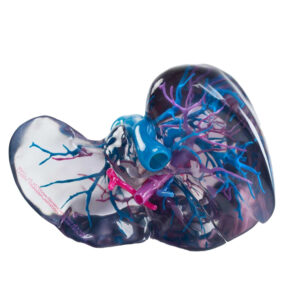
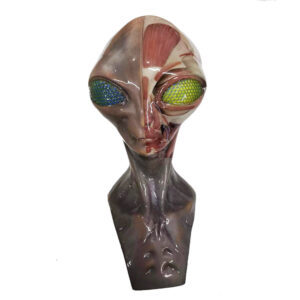
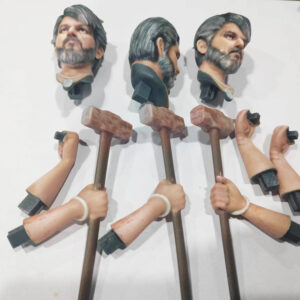
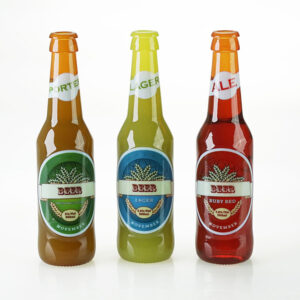
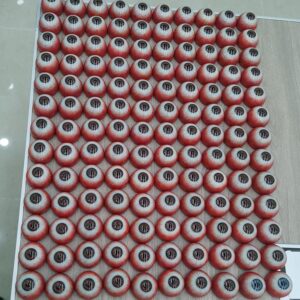
PolyJet / Full Color 3D Printing is a high-precision additive manufacturing technology that operates similarly to an inkjet printer. It jets and instantly cures layers of liquid photopolymer resin using UV light. Its unique capability to simultaneously jet multiple materials and colors in a single print job allows for the creation of complex, multi-material parts with vibrant full color, varying textures, and flexible or rigid properties in a single object.
This technology is ideal for producing ultra-realistic prototypes, detailed anatomical models, product designs requiring color-coding, and any application where visual accuracy and material versatility are critical.
PolyJet is commonly used for full‑color multi‑hardness parts, medical models, display mock‑ups, and multi‑material prototypes.

FDM(Fused DepositionModeling)
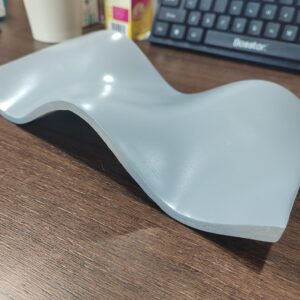
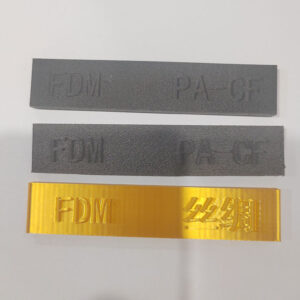
Fused Deposition Modeling (FDM) is one of the most common and accessible 3D printing technologies. It works by heating and extruding a continuous filament of thermoplastic material (such as PLA or ABS) through a nozzle, depositing it layer by layer onto a build platform to create a solid object.
Renowned for its simplicity, material versatility, and cost-effectiveness, FDM is widely used for functional prototyping, concept modeling, educational purposes, and manufacturing low-cost tooling and end-use parts.
FDM is commonly used for high‑temperature engineering plastic parts, jigs & fixtures, rail transit components, and low‑cost test parts.
SLM(Selective Laser Melting)
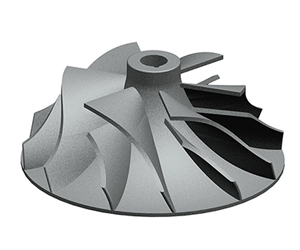
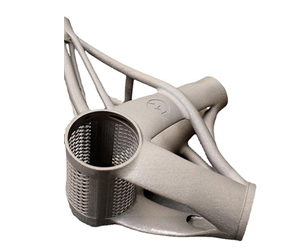
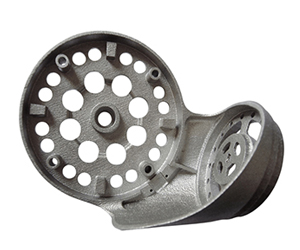
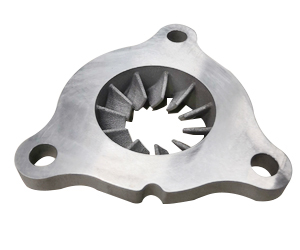
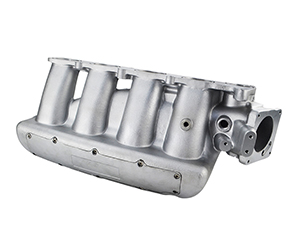
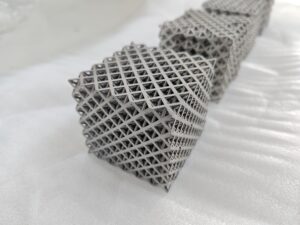
Selective Laser Melting (SLM) is an industrial-grade powder bed fusion metal additive manufacturing technology. Using high-precision fiber laser, the system selectively melts and fuses metal powder layer by layer according to 3D CAD data. The material achieves full metallurgical bonding, forming high-density, high-strength metal parts in one piece without molds, cutting, or welding.
As a mainstream industrial metal 3D printing technology for high-end manufacturing, SLM delivers solid, reliable mechanical performance that fully matches forged parts. It features ultra-high dimensional accuracy and excellent surface uniformity, making it ideal for precision component R&D and small-batch production.
SLM is commonly used for high‑strength complex metal structures, aerospace parts, racing components, hydraulic parts, and mold inserts.
DLP (Digital LightProcessing)
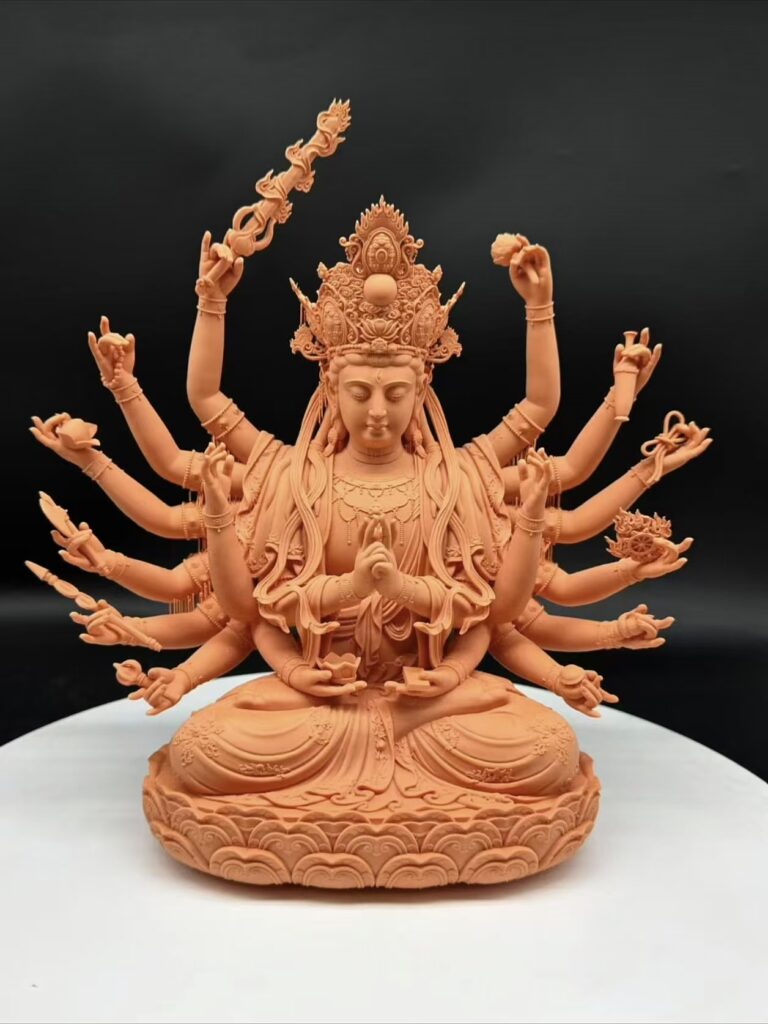
Digital Light Processing (DLP) is a high-speed 3D printing technology that uses a digital light projector to cure an entire layer of liquid photopolymer resin simultaneously with UV light. This process allows for fast print times and produces parts with excellent surface finish, high accuracy, and fine detail.
Ideal for applications requiring smooth finishes and intricate features, DLP is commonly used for detailed prototypes, jewelry casting, dental models, and figurines.
LCD / MSLA Resin 3D Printing
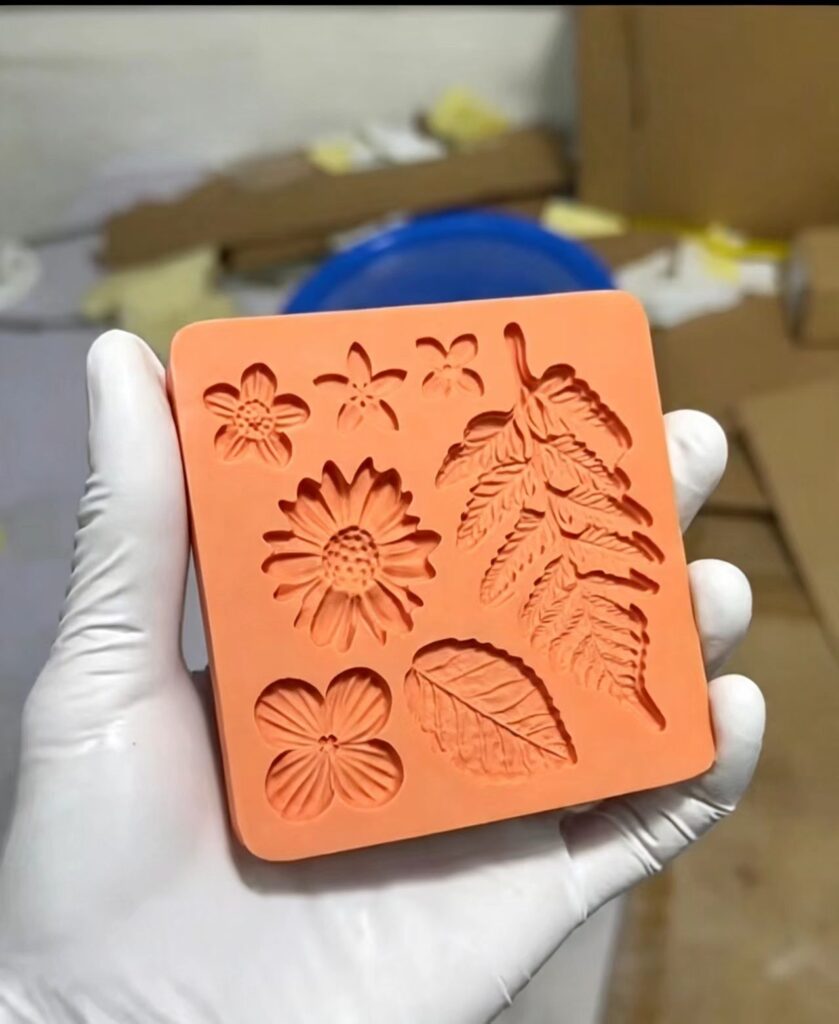
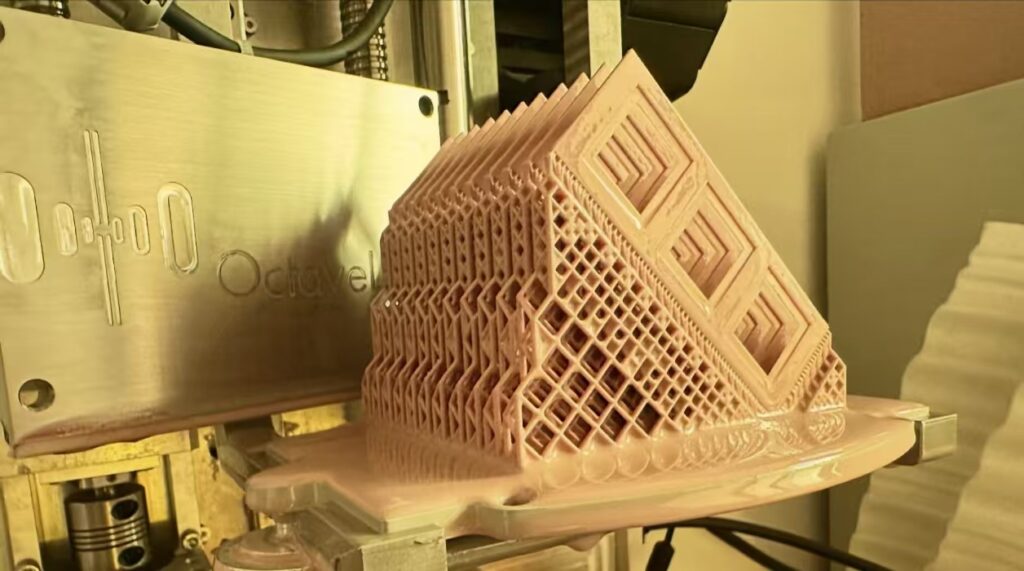
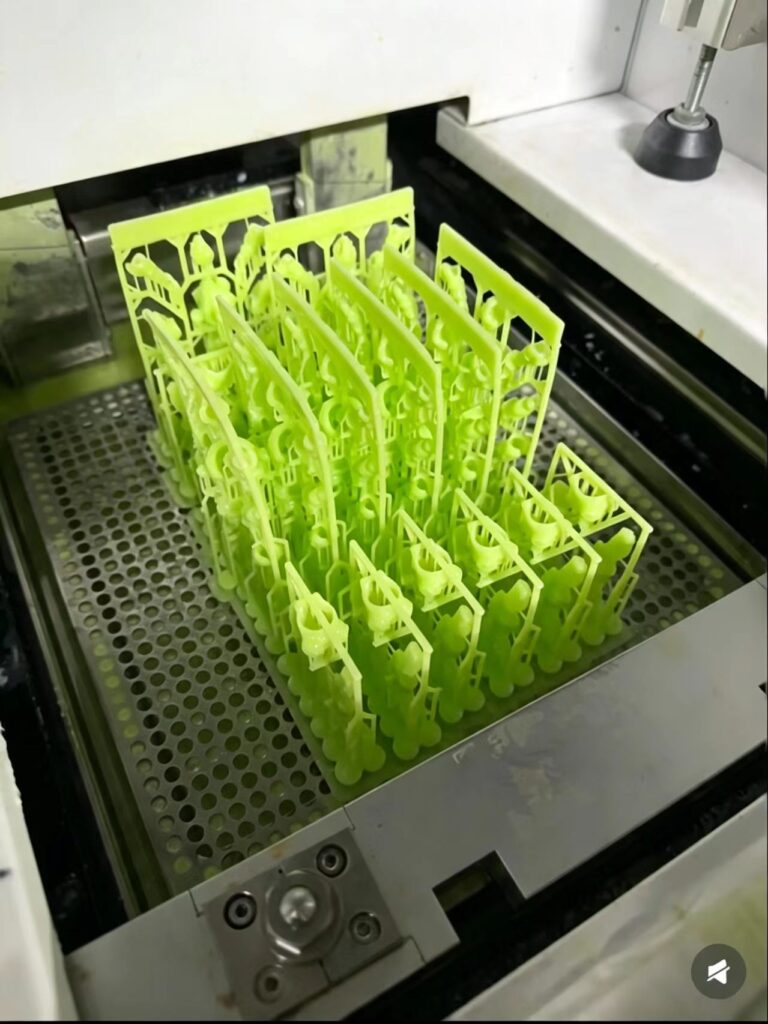
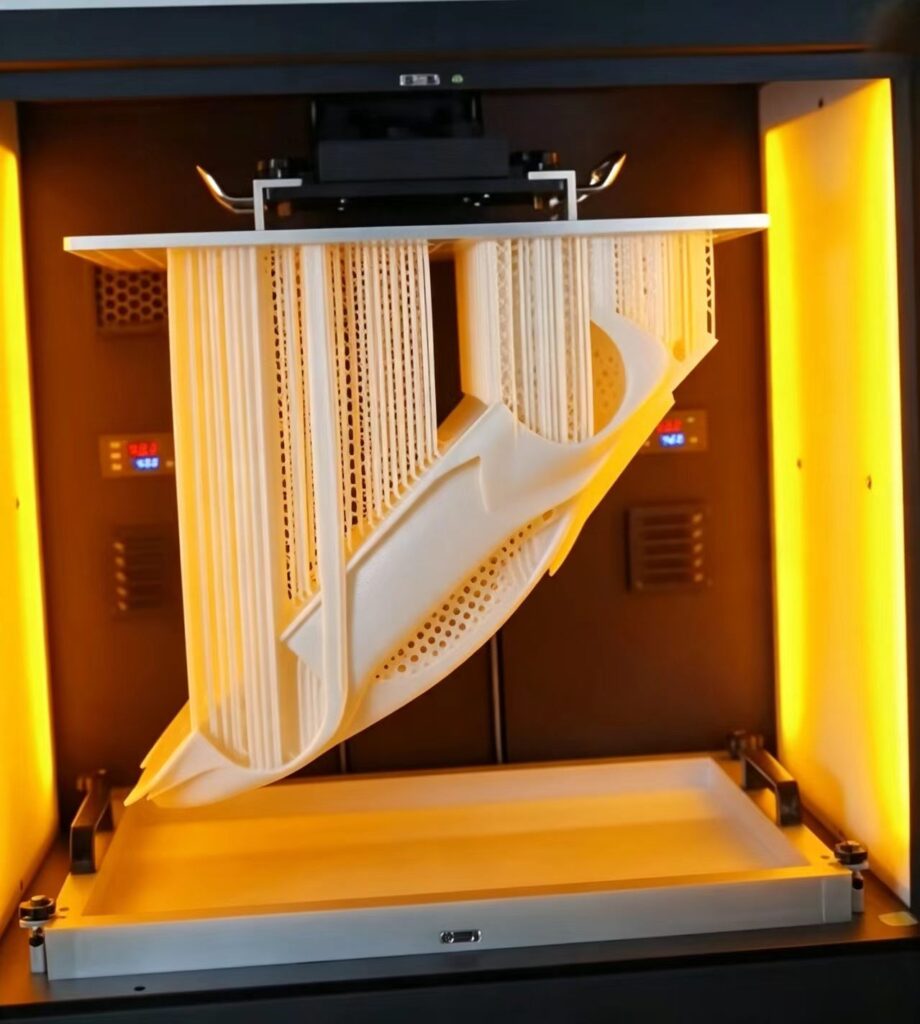
LCD (also known as MSLA‑Masked Stereolithography) is a cost‑effective vat‑photopolymerization technology. UV‑LED backlight passes through a monochrome LCD screen acting as a dynamic mask. The LCD screen blocks UV light except for the cross‑section shape of your model. Liquid photopolymer resin cures for the whole layer at one time. The build platform lifts, and parts are built layer‑by‑layer.
Different from laser‑scanning SLA, LCD cures an entire layer simultaneously. Printing speed does not depend on part complexity, bringing great advantages for small‑part batch production.
LCD is commonly used for cost‑efficient medium‑small appearance prototypes, consumer electronics housings, small home appliances, cultural‑creative products, robot casings, and scale models.