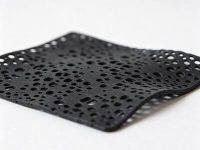
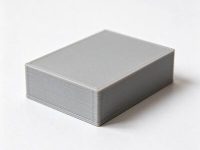
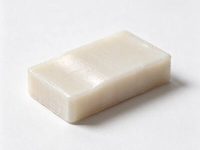
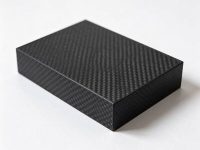
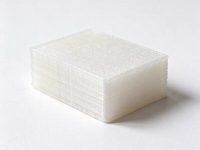
Selective Laser Sintering (SLS) fuses powdered polymer layer by layer with a high-power laser. The unsintered powder acts as built-in support, so parts can stand freely during the build — no support structures needed.
Because every layer is fused inside a powder bed, SLS handles complex geometries, internal channels, thin walls and living hinges that are difficult with other processes. The result is functional, isotropic nylon parts suitable for prototypes, jigs and end-use components.
Uses a laser to sinter powdered material
Builds parts layer by layer
No support structures required
Enables complex geometries and internal features
Strong, functional parts
Wide range of engineering materials
Wide range of engineering materials
Suitable for prototypes and end-use parts
No Supports Needed
Parts self-support during printing, reducing material use and post-processing.
Complex Geometries
Build intricate designs, internal channels and lightweight structures.
Isotropic Strength
Consistent mechanical performance in all directions.
High Batch Capacity
Produce multiple parts in a single build for efficient scaling.
How It Works
Upload Your CAD File
Send us your STL or STEP files via email or our upload portal.
Laser Sintering
The laser selectively sinters powdered material layer by layer.
Depowdering
Remove unsintered powder from the part and surfaces.
Finishing & QC
Post-processing, inspection and packing before shipment.
SLS Materials
Eight of our most requested SLS nylon and elastomer grades — stiffness, flexibility and heat resistance each covered.
PA12
Strong, versatile, and widely used.
PA11
Tough, flexible, and impact-resistant.
PA12 GF
Glass-filled for higher stiffness and strength.
TPU
Flexible, elastic, and abrasion-resistant.
PP
Lightweight, chemical resistant, food-contact safe.
TPE
Soft, elastic, and suitable for seals & grips.
PA6
High strength, stiffness, and heat resistance.
PA11 GB
Glass-bead filled for enhanced performance.
SLS Material Properties
Material
Colour
Tensile Strength
Tensile Modulus
Elongation at Break
PA12
White
48 MPa
1.7 GPa
20%
PA11
Natural
42 MPa
1.5 GPa
30%
PA12 GF
White
60 MPa
2.3 GPa
10%
TPU
Black
25 MPa
0.6 GPa
50%
PP
Natural
35 MPa
1.2 GPa
25%
PA6
Natural
55 MPa
2.0 GPa
15%
Typical values for XY-plane specimens. Actual performance depends on build orientation, density and post-processing.
YYI3D FAQs
Find quick answers about manufacturability, lead times, materials, finishes, quality documentation, and compliance. Need more support? Start a quote or explore our Help Center.
SLS uses a laser to sinter polymer powder layer by layer. Unused powder acts as support, which is why complex, support-free nylon parts can be produced in a single build.
What materials are available?
We offer PA12, PA11, glass-filled grades, TPU, TPE, PP and PA6, with natural and dyed colours available on request.
How strong are SLS parts?
SLS parts are isotropic with good tensile strength and toughness, suitable for functional prototypes and load-bearing end-use components.
What is the typical lead time?
Standard parts ship in 2 to 5 days after file approval. Large batches or parts requiring extra finishing may take 5 to 7 days.
Quality You Can Count On
Every part is checked before it leaves our factory.
Consistent Quality
Built with precision and care on calibrated machines.
Certified Materials
Industry-grade powders with material data sheets.
Rigorous Testing
Quality checks at every stage of the build.
0.10 - 0.30 mm
Layer Thickness
Up to 300×300×400 mm
Part Size
Multiple parts per build
Batch Size
2 - 5 Days
Lead Time
Ready to Start Your Project?
Send us your CAD files and get a quote within 24 hours.